
Product Details
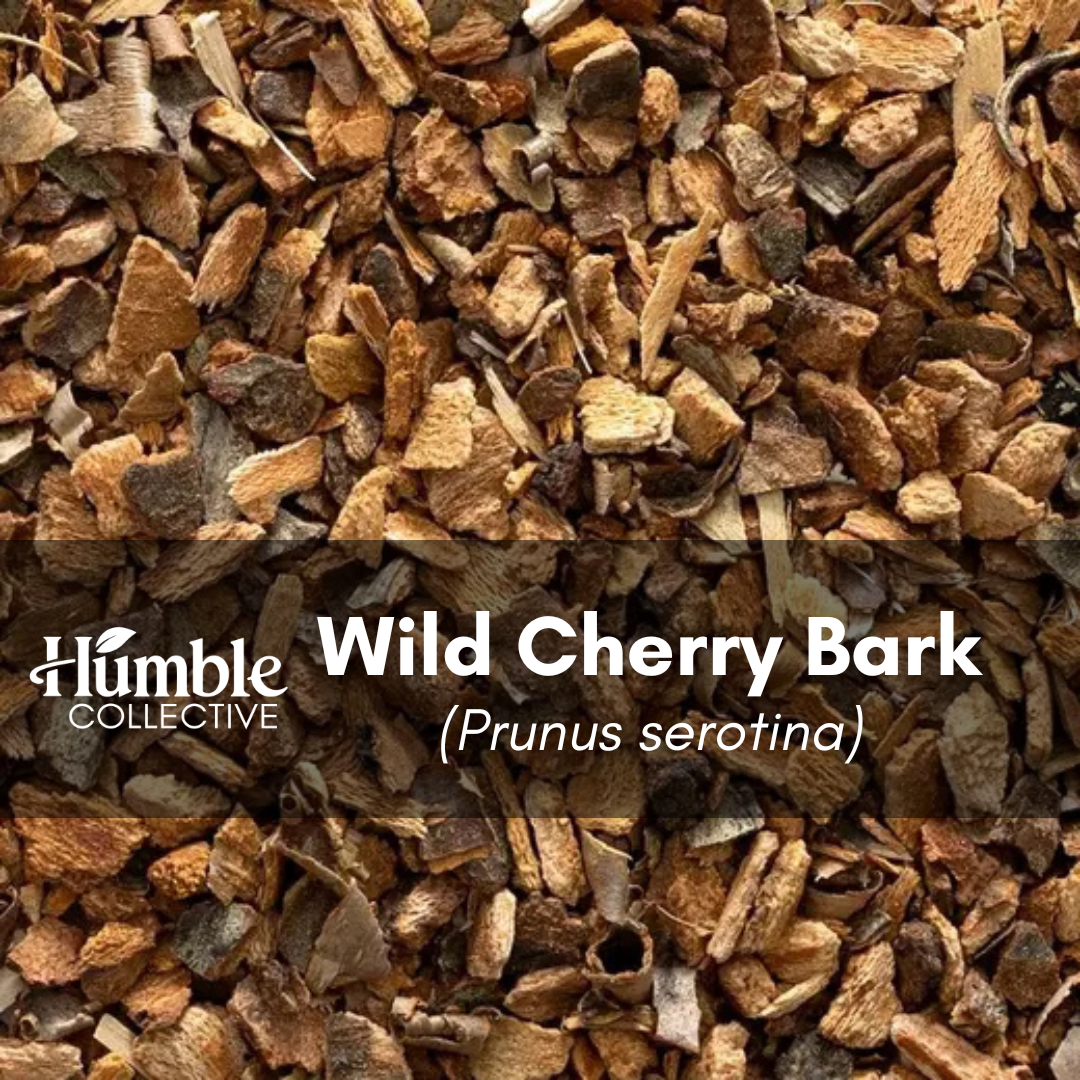
Wild Cherry Bark is the dried inner bark of Prunus serotina, a medium to large tree native to Eastern and Central North America. Wild cherry belongs to the Rosaceae family, the same plant family as roses, peaches, apples, and hawthorn.
The inner bark of the branches is typically harvested from late summer into fall and dried right away for traditional herbal preparations. When placed in water, wild cherry bark develops a faint almond-like aroma with a bitter, aromatic flavor. It is commonly used in teas, syrups, tinctures, and home apothecary recipes.
Unlike many herbs, wild cherry bark is best prepared as a cold infusion, allowing the bark to steep slowly in cold water for several hours. It can also be used externally as a strong tea for topical poultice recipes.
Botanical Name:
Prunus serotina
Common Name:
Wild Cherry Bark
Plant Part Used:
Inner bark
Form:
Cut bark
Origin:
United States of America
Flavor/Aroma Profile:
Bitter, aromatic, woody, faintly almond-like when infused
Product Features:
Inner bark
Cut bulk herb
Native North American tree
Traditionally used for teas and syrups
Not organic
Packaged in a 2 oz bag
Size:
2 oz bag
Natural Variation:
Product color, size, texture, and aroma may vary by lot due to natural differences in growing conditions, harvest time, and drying methods.
Ingredient List
Wild Cherry Bark
How to Use
Suggested Uses:
Cold infusions
Loose leaf herbal tea
Homemade syrups
Tinctures
Topical poultice recipes
Traditional herbal preparations
Home apothecary use
Botanical collections
How to Prepare as a Cold Infusion:
Add 1–2 teaspoons of wild cherry bark to 8 oz of cold water. Cover and let steep for at least 4–6 hours, then strain. Sweeten or blend as desired.
Syrup Tip:
Wild cherry bark has a naturally bitter, aromatic flavor and a faint almond-like aroma that works well in homemade herbal syrup recipes.
Topical Use Tip:
A strong tea made with wild cherry bark may be used in external poultice recipes. Allow to cool before applying to skin, and avoid use on broken or irritated skin.
Blending Tip:
Wild cherry bark blends well with licorice root, marshmallow root, slippery elm bark, mullein leaf, elderberries, cinnamon, ginger, orange peel, rosehips, and honey.
Our Promise to You
We’re here to help you make an informed choice. You’ll find ingredient and preparation information on this page, and our team is available for questions about this product or your order. Contact us for friendly, personal support.
General Disclaimer / Precautions
Consult your healthcare provider before use if pregnant, nursing, taking medications, managing a health condition, or using herbs regularly. Use only properly dried bark from a reputable source. Do not consume fresh, wilted, or improperly prepared cherry leaves, bark, or pits. Keep out of reach of children.
This product is not intended to diagnose, treat, cure, or prevent any disease.
Packaged in small batches with care.
Reviews
There are no reviews yet.